Early Start (0-3): California's Early Intervention Program
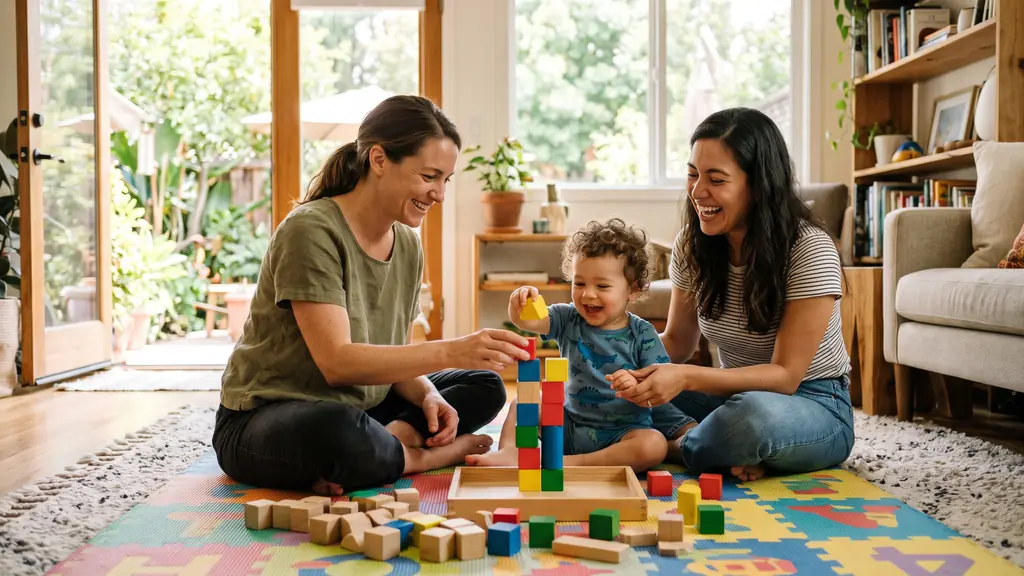
Early Start is California's early intervention program for children from birth to age three. If your child has a developmental delay, a diagnosed condition, or is at risk of delay, Early Start pays for the therapy and support they need. There is no cost to your family and no insurance requirement.
Referrals go through your regional center, or you can call the Early Start BabyLine directly at 800-515-2229.
Why the first three years matter
The window between birth and age three is when the brain forms connections fastest. Intervention during this period produces measurably better long-term outcomes than the same services delivered later. A child who receives speech therapy at eighteen months often needs far less support at five than a child who started at four.
This is the reasoning behind the whole program. California funds Early Start generously because early dollars reduce later ones, and because families who get help early stay better equipped as their child grows.
If you suspect a delay, do not wait for a diagnosis to make the call. Early Start evaluates children on suspicion of delay, not on confirmed diagnosis.
Who qualifies
A child under three may be eligible if any one of the following applies.
Developmental delay. Your child shows a delay in cognitive development, physical development, communication, social or emotional development, or adaptive skills. A single area is enough. You do not need a formal diagnosis to be evaluated.
An established risk condition. Your child has a diagnosed condition with a known likelihood of developmental delay. Down syndrome, cerebral palsy, and certain genetic, neurological, and sensory conditions fall in this category. Children here typically qualify on the diagnosis alone.
At risk of delay. Medical or environmental factors make delay likely. Significant prematurity, low birth weight, prolonged NICU stays, and certain prenatal exposures are common examples.
Early Start eligibility is deliberately broader than eligibility for Lanterman Act services that apply after age three. Many children qualify for Early Start who will not qualify for regional center services later. Plan for that transition early. See what happens at age three below.
What services are covered
Services are matched to your child, not pulled from a fixed menu. The most common are:
- Speech and language therapy for children who are late to babble, late to words, or hard to understand
- Occupational therapy for fine motor skills, sensory processing, feeding, and self-care
- Physical therapy for gross motor delays, muscle tone, crawling, and walking
- Special instruction targeting cognitive and learning development
- Family training and counseling, so you can carry the work between sessions
- Health and nutrition services, including feeding support
- Service coordination, your single point of contact who ties the whole plan together
Your service coordinator is the person to call when something is not working. They arrange evaluations, convene your planning meetings, and connect you to providers.
The Individualized Family Service Plan (IFSP)
For children over three, the planning document is the Individual Program Plan. Under three, it is the Individualized Family Service Plan, and the difference matters.
The IFSP plans around the family, not only the child. It records your child's current abilities, the outcomes you want, the specific services that will get you there, how often each is delivered, and where. Because a two-year-old learns primarily from the people they live with, the plan treats your household as part of the intervention.
The IFSP is reviewed at least every six months and rewritten annually. You can request a review sooner at any time, and you should when a service is not producing results.
Every IFSP also carries a transition plan mapping the move from Early Start to preschool and whatever comes next. That section is the most overlooked part of the document and the most consequential.
Working on plan goals: see our guide to IPP goal-setting, which applies to IFSP outcomes as well.
How to start
- Call. Contact your regional center, or the Early Start BabyLine at 800-515-2229. The general DDS line is 833-421-0061. Use the DDS regional center lookup to find yours.
- Request intake and evaluation. Free, no referral needed, no insurance required.
- Complete the assessment. A team evaluates your child across all five developmental areas.
- Build the IFSP. If eligible, you and the team write the plan together. Bring your own goals to this meeting.
- Begin services. Delivery starts under the timelines in your plan.
Full walkthrough: How to Apply. Preparation matters more than families expect, so read preparing for your intake interview and what documentation you need first.
If you are denied, you have appeal rights. See Your Rights and how to file a fair hearing request.
Related reading
- Early Start: Speech & Language Therapy Overview
- Early Start: Occupational Therapy and Sensory Supports
- Early Start: Transition at Age 3, What Happens Next
- Regional Center Services
- Education Services
Frequently asked questions
How do I apply for Early Start?
Contact your regional center and request an intake and evaluation, or call the Early Start BabyLine at 800-515-2229. Intake staff determine eligibility and guide you through the rest. No physician referral is required and you can self-refer as a parent.
Do families pay for Early Start services?
No. Early Start services are provided at no cost to eligible families. There is no income test, no copay, and no requirement to carry private insurance. If a provider asks you for payment, contact your service coordinator immediately.
Where are services delivered?
In your child's natural environment wherever possible. That usually means your home, but it can also be a childcare center, a relative's home, or another familiar community setting. The goal is to keep children with their families and in their communities rather than pulling them into clinical settings.
What happens when my child turns three?
Early Start ends at the third birthday. Your regional center coordinates the transition to preschool special education through your school district, and to any continuing regional center services your child qualifies for. Note that eligibility is reassessed against a stricter standard at three, and some children who qualified for Early Start do not continue to qualify. Start the transition conversation at least six months before the birthday.
Does my child need a diagnosis to qualify?
No. A suspected developmental delay is enough to trigger a free evaluation. Many children enter Early Start with no diagnosis at all, and some never receive one. Do not wait for a diagnosis before calling.
How quickly do services begin after I call?
State law sets the timeline from referral through evaluation to a written IFSP, and services follow the schedule in your plan. If your dates are slipping, raise it with your service coordinator in writing. See timelines from application to services.
Reviewed by the DDSConnect Editorial Team.
DDSConnect is an independent informational resource. It is not affiliated with, endorsed by, or operated by the California Department of Developmental Services or any regional center. Phone numbers listed belong to the California Department of Developmental Services.
Updated